
Leading automakers in India, including Maruti Suzuki, Tata Motors, Mahindra & Mahindra, and Hyundai, reported increased vehicle dispatches to dealers in February, driven by sustained domestic demand.
Leading automakers in India, including Maruti Suzuki, Tata Motors, Mahindra & Mahindra, and Hyundai, reported increased vehicle dispatches to dealers in February, driven by sustained domestic demand.

Tata Motors is maintaining its lead over Mahindra & Mahindra in the race for the second position in India's passenger vehicle market, largely driven by its strong performance in electric vehicle sales. Both companies are aggressively expanding their SUV and EV portfolios and scaling up production to meet surging demand, indicating a fierce competition ahead.

Tata Motors emerged as the biggest gainer in the passenger vehicles (PV) market in the second half of FY25, following a GST rate cut in September, achieving the highest growth among major OEMs and overtaking Mahindra & Mahindra in volumes.
Tata Motors expands its market leadership in India's electric passenger vehicle (ePV) segment, capturing 39 per cent of the market in Q1FY27, while simultaneously strengthening its position as the nation's second-largest carmaker amidst fierce competition and rapid market growth.

Tata Motors and Mahindra & Mahindra have cut the prices of their SUV models to boost demand. Tata Motors has revised the starting prices of its flagship SUVs, the Harrier (Rs 14.99 lakh) and the Safari (Rs 15.49 lakh) and extended benefits of up to Rs 1.4 lakh on other popular SUV variants.

Don't be surprised if you see cars from the two manufacturer in a foreign land. The carmakers are supplying their vehicle in over 11 countries.

Want to know why Pratap Bose, Chief Creative and Design Officer at Mahindra Global Design thinks so?

Tata Motors has emerged as the biggest market-share gainer among India's leading passenger vehicle (PV) makers in the first eight months of 2026, securing the No. 2 position in the PV market.
India's passenger vehicle wholesales increased by 12.4 per cent year-on-year in October, reaching 528,384 units, driven by robust festival demand, GST rate cuts, income-tax relief, and low interest rates, which collectively improved vehicle affordability.
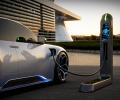
Electric passenger vehicle registrations in India surged by nearly 75 per cent year-on-year in October, significantly cushioning the 14.6 per cent contraction in the overall passenger vehicle market. This growth was particularly beneficial for manufacturers like Tata Motors and Mahindra, whose EV sales helped offset sharper declines in conventional internal combustion engine (ICE) vehicle registrations.

India's passenger vehicle sales are estimated to have surged by approximately 35 per cent to about 4.5 lakh units in August, driven by strong performances from major automakers like Maruti Suzuki India, Tata Motors Passenger Vehicles, and Mahindra & Mahindra, with the industry entering the festive season with optimism.
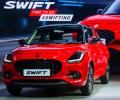
Passenger vehicle sales in India are estimated to have surged by nearly 25 per cent in June 2024, reaching approximately 4 lakh units, with Maruti Suzuki, Tata Motors PV, and Mahindra & Mahindra leading the growth, despite concerns over geopolitical tensions and monsoon impact.

'The reported deal between the European Union and China should mitigate it (shortage) for the medium to long term. Let's wait and watch how this plays out.'

Why is Shailesh Chandra, managing director of Tata Motors Passenger Vehicles and Tata Passenger Electric Mobility, not worried about the competition?

Mahindra and Mahindra (M&M) recorded the sharpest acceleration among large players, with EV retail jumping to 33,513 units from 7,139 units, an almost 5-fold jump, aided by strong demand for new launches.

With entry-level cars being preferred amid the pandemic, market leader Maruti Suzuki has strengthened its hold, along with Hyundai Motor India.

Bajaj Auto received the highest incentive payout under the government's Production-Linked Incentive (PLI) scheme for automobiles and auto components in FY26, securing approximately 625.65 crore. Despite exceeding investment targets, the scheme has significantly underperformed in job creation and incremental sales, generating only 46% of projected jobs and 23% of targeted sales by March 2026.
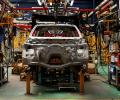
Passenger vehicle dispatches in the domestic Indian market are estimated to have surged by 33 per cent to approximately 4.7 lakh units in July, with market leaders Maruti Suzuki and Hyundai reporting record sales, alongside significant growth from Tata Motors and Mahindra & Mahindra.

India's auto sector has reported robust vehicle deliveries during Dhanteras, with major automakers like Maruti Suzuki, Tata Motors, and Hyundai India experiencing significant growth across two-wheeler, passenger vehicle, and commercial vehicle segments. This strong momentum is expected to continue through Diwali, driven by positive market sentiment and high demand, even in the pre-owned car market.

September marked India's highest-ever monthly EV retail volume. More than one in nine two-wheelers retailed in September was electric.

Between January and August 2025, over 65,000 units of the Bolero were sold, making it the third-highest contributor to Mahindra's overall SUV sales. Bolero annually achieves sales of over 1 lakh units.

Mahindra & Mahindra on Saturday said it has reduced prices of its passenger vehicle range by up to Rs 1.56 lakh with immediate effect in order to pass on GST rate cut benefit to customers. The price cut follows the announcement of revamped GST at the 56th GST Council meeting held on September 3, 2025, the Mumbai-based auto major said in a statement.
Electric passenger vehicle retail sales in India surged by 81.2 per cent to 26,682 units in May, with Tata Motors leading the segment, while electric two-wheeler sales also saw a substantial 62.76 per cent increase, according to the Federation of Automobile Dealers Associations (FADA).
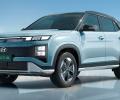
Long standing number two passenger vehicle maker in India, Hyundai Motor India, has slipped to fourth position in the domestic market in terms of retail sales last month behind Maruti Suzuki India, Mahindra & Mahindra and Tata Motors, as per the latest data shared by dealer's body FADA. Hyundai Motor India clocked retail sales of 38,156 units last month, a dip of 20 per cent as compared with 47,540 units in February last year.
Electric passenger vehicle (PV) retail sales jumped more than twofold in September with Tata Motors (TaMo) leading the pack having over 6,000 registrations and a 40 per cent market share.

Tata Harrier.ev versus Mahindra BE.06 versus Mahindra XEV.9E -- which one should you buy? Rajesh Karkera offers a checklist of features to influence your decision.

Among the 30 Sensex firms, Tata Motors was the biggest loser, tumbling nearly 6 per cent, followed by NTPC, Adani Ports, Larsen & Toubro, State Bank of India, JSW Steel, Mahindra & Mahindra, IndusInd Bank and Titan. In contrast, Asian Paints, Bajaj Finance, Hindustan Unilever and Bajaj Finserv were among the gainers.

Indian carmakers, including Maruti Suzuki and Kia India, reported robust sales growth in May 2026, with both companies achieving their highest-ever monthly sales despite rising fuel prices. Maruti Suzuki's domestic sales surged to 1,93,535 units, while Kia India recorded 27,586 units, driven by strong demand in mini and compact segments and a shift towards electric and CNG vehicles.
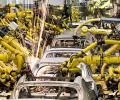
Passenger vehicle sales in India reached a record high of 4.7 million units in FY26, boosted by strong performances from major automakers and the implementation of GST 2.0.

Among the 30 Sensex firms, Tata Motors jumped over 4 per cent, followed by Bajaj Finserv, Bajaj Finance, HCL Technologies, ITC, Reliance Industries, Tech Mahindra, Maruti and State Bank of India. Reliance Industries climbed nearly 2 per cent after Mukesh Ambani, chairman and managing director of the firm, said the board of the company will meet on September 5 to consider issuing bonus shares in the ratio of 1:1.

India's domestic passenger vehicle sales experienced a robust 24.6 per cent year-on-year increase in June, propelled by favourable government policies like income tax relief and repo rate cuts, alongside resilient rural demand, even as global crude oil prices pose potential cost pressures.

As India's festive season approaches, passenger vehicle dealers are seeing a notable increase in inventories, yet discounts remain surprisingly moderate compared to previous years, signalling a tighter demand-supply balance in the automotive market.
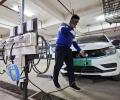
The Indian government has made electric vehicles (EVs) the default choice for staff car procurement across ministries and departments, setting a higher price cap of 20 lakh for EVs compared to 10 lakh for ICE vehicles. Concurrently, new guidelines have been issued for procuring electronic devices, incentivising 'Make in India' products with a higher price ceiling.
Indian automobile majors Tata Motors and Mahindra & Mahindra (M&M) have shown interest in taking over the Termini Imerese plant owned by Italy's largest car maker Fiat. Fiat has already decided to relocate the Termini Imerese plant, preferably to cost-effective areas of Poland or Germany, in 2011.

Among the cars unveiled at the Auto Expo on Wednesday was Mahindra and Mahindra's e-KUV for Rs 8.2 lakhs ex-showroom Delhi. With a single charge range of 150 km and a 55 min fast charging upto 80 pc, it was both a head-turner and a conversation-starter.

New players like Maruti Suzuki, VinFast, and Tesla are significantly expanding India's electric passenger vehicle (e-PV) market, capturing an 8.1 per cent share and contributing 18 per cent of incremental registrations in the first half of 2026, according to Fada Research data.

Recently, TPEM's first born electric concept, Avinya broke cover. The model promises a minimum range of 500 kilometres and advanced technology features, aimed at buyers in India and outside. TPEM, the newly formed entity may also consider a separate dedicated sales channel for the EVs with a distinctive corporate identity once the volumes reach a critical mass and throughput is large enough for the dealers to be profitable, said Chandra. Elaborating further on the hiring strategy he said, "We will hire from everywhere-wherever the talent of the required competency is available."

In the first 4 months of CY17, Honda has sold 14% more units than Tata Motors

Tata Motors, the market leader in electric four-wheeler space, has sought incentives for its Tiago EV under the government's production-linked incentive (PLI) scheme, group chief financial officer P B Balaji said on Tuesday. The Mumbai-headquartered firm has applied for all variants of the Tiago, which recently hit a sales milestone of 10,000 units. "The Automotive Research Association of India certification is done.
